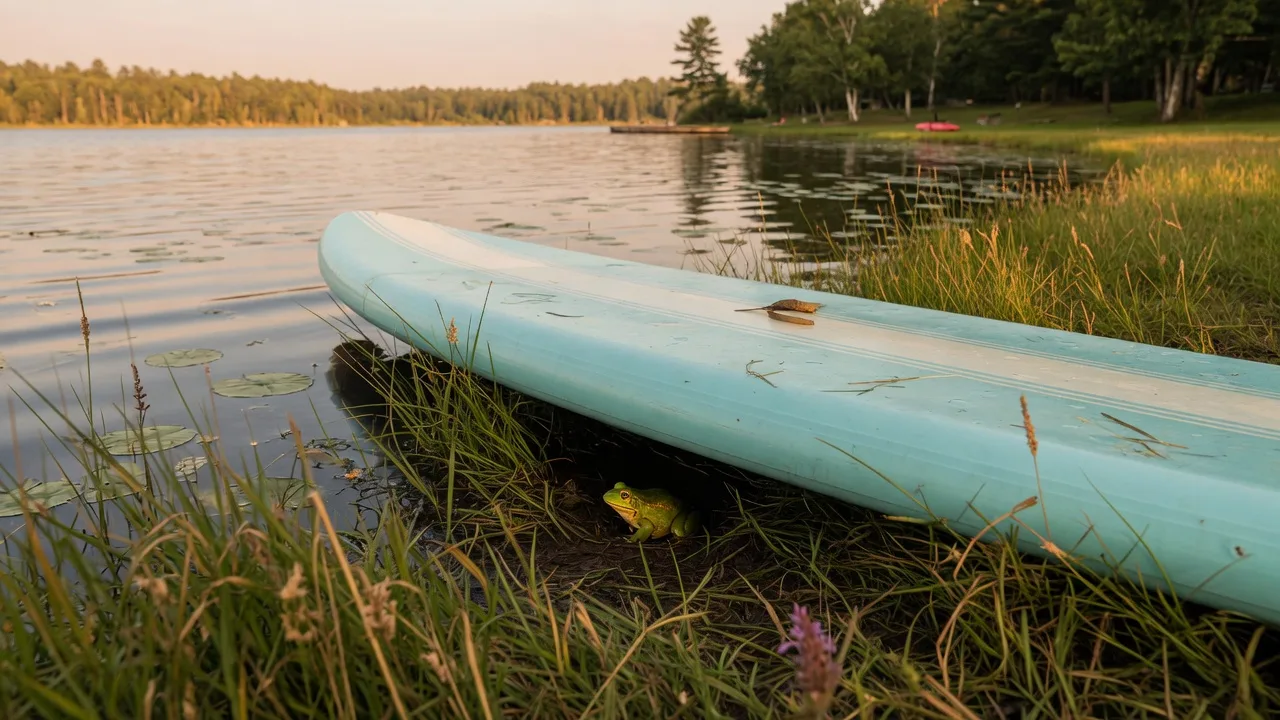
Pick up a paddle board, kayak or float that has been sitting near the shoreline for a few days and you may discover you've accidentally created a little frog condominium.
By late August, frogs around Minnesota lakes are reaching an interesting point in their yearly cycle. The frantic chorus of spring has mostly quieted. Tadpoles have been transforming into tiny frogs throughout the summer, and adults are beginning to shift from breeding and feeding season toward preparing for the colder months ahead.
That shady, damp space underneath a paddle board turns out to be pretty attractive real estate.
From Eggs to Frogs
A frog's year around the lake really begins in spring.
As water temperatures rise, adult frogs return to ponds, wetlands and shallow areas of lakes to breed. The familiar calls we hear on spring evenings aren't just background noise—they're mostly males advertising for mates.
Females lay clusters or masses of eggs in the water. Those hatch into tadpoles, which spend the early part of their lives looking almost nothing like the frogs they'll become.
Over the following weeks and months, the transformation is remarkable. Tadpoles develop hind legs, then front legs. Their lungs develop, their digestive system changes, and eventually their tails are absorbed into their bodies.
By mid- to late summer, many of those tadpoles have become miniature versions of the adults.
So What Are They Doing Under the Paddle Board?
Probably exactly what you would do on a hot August afternoon: finding some shade.
Frogs need moisture. Their skin plays an important role in respiration as well as water balance, which makes cool, damp hiding places valuable.
A paddle board lying near the shoreline can create a surprisingly good temporary shelter. It blocks direct sunlight, traps moisture underneath and provides protection from birds and other predators.
Around the lake, frogs use all kinds of similar hiding places—vegetation, logs, rocks, docks and shoreline debris.
The paddle board just happens to be the human-made version.
Frogs Have a Job Around the Lake
It's easy to think of frogs simply as another creature living beside the water, but they're positioned right in the middle of the food web.
Adult frogs eat insects and other small invertebrates, including mosquitoes, flies, beetles, moths and spiders.
Then the frogs themselves become food.
Herons, snakes, turtles, fish, raccoons and other wildlife all prey on frogs at different stages of their lives.
Tadpoles also play their own role in aquatic ecosystems by feeding on algae, plant material and organic matter.
In other words, frogs help move energy from the water to the land and back again.
They're Also Telling Us Something
Frogs are amphibians, which means they spend portions of their lives associated with both aquatic and terrestrial environments.
Their permeable skin also makes them particularly sensitive to changes in water quality, pollutants, habitat loss and other environmental conditions.
That's one reason scientists pay attention to frog populations. A healthy community of frogs can be one piece of evidence that a wetland or shoreline ecosystem is functioning well.
So hearing frogs around the lake—or finding a handful hiding underneath the paddle board—isn't necessarily a nuisance.
It can be a pretty good sign.
What Happens Next?
As September approaches and temperatures begin dropping, frogs start preparing for winter.
Different species handle Minnesota winters differently.
Some aquatic frogs spend the cold months underwater, settling into oxygen-rich areas near the bottom while dramatically slowing their metabolism.
Other species overwinter on land beneath leaves, logs or shallow soil. A few Minnesota frogs have an extraordinary adaptation that allows portions of their bodies to freeze during winter and then thaw again in spring.
For now, though, it's still late summer.
The young frogs are growing. Adults are feeding while insects remain plentiful. And everyone is taking advantage of the last stretch of warm weather before another Minnesota winter arrives.
Which brings us back to the paddle board.
To us, it's something we forgot to put away after a day on the lake.
To a frog, it's lakefront property with shade, moisture and a roof.
And apparently, the rent is pretty reasonable.
Good or Bad for the Lake? What People Ask About Frogs
A few questions come up again and again once the paddle board gets flipped over and the tenant is discovered. Here are the short answers.
Are frogs good or bad for my lake or pond?
Good, almost always. Frogs eat mosquitoes, flies, beetles and other insects, and tadpoles graze on algae. Scientists treat a healthy frog population as a sign a wetland or shoreline is functioning well. The only real downside is the occasional spring-night serenade.
Why do frogs hide under my paddle board, kayak or boat cover?
They're looking for shade and moisture. Frog skin needs to stay damp, and anything that blocks the sun and traps humidity near the water makes a perfect hiding spot.
Why did the frogs go quiet in summer?
The spring breeding chorus is over. Once mating wraps up, adult frogs mostly go quiet and turn their attention to feeding.
When do baby frogs leave the water?
Across Minnesota, most young frogs and toads leave the water in waves from late June into September, depending on the species and how warm the spring was. That's why you'll suddenly notice tiny frogs hopping around the shoreline in late summer.
Do frogs really freeze in winter?
Some Minnesota species do. Aquatic frogs like green frogs and bullfrogs overwinter in the mud and oxygen-rich water near the bottom of lakes. Others, like wood frogs, hibernate on land and can survive portions of their bodies freezing solid, then thaw out in spring.
More from The Lure
- Bird Photography Walk & Talk at Oak Ridge WPA → — A free, family-friendly walk with the waterfowl, reeds, and wildlife that share these lake communities.
- Lakefront Living → — What life on the water is really like through all four seasons.
- Lake Guides → — Water quality, boat access, fishing, and what it's actually like on each Twin Cities lake.
- All Blog Posts → — More stories from the lake communities.