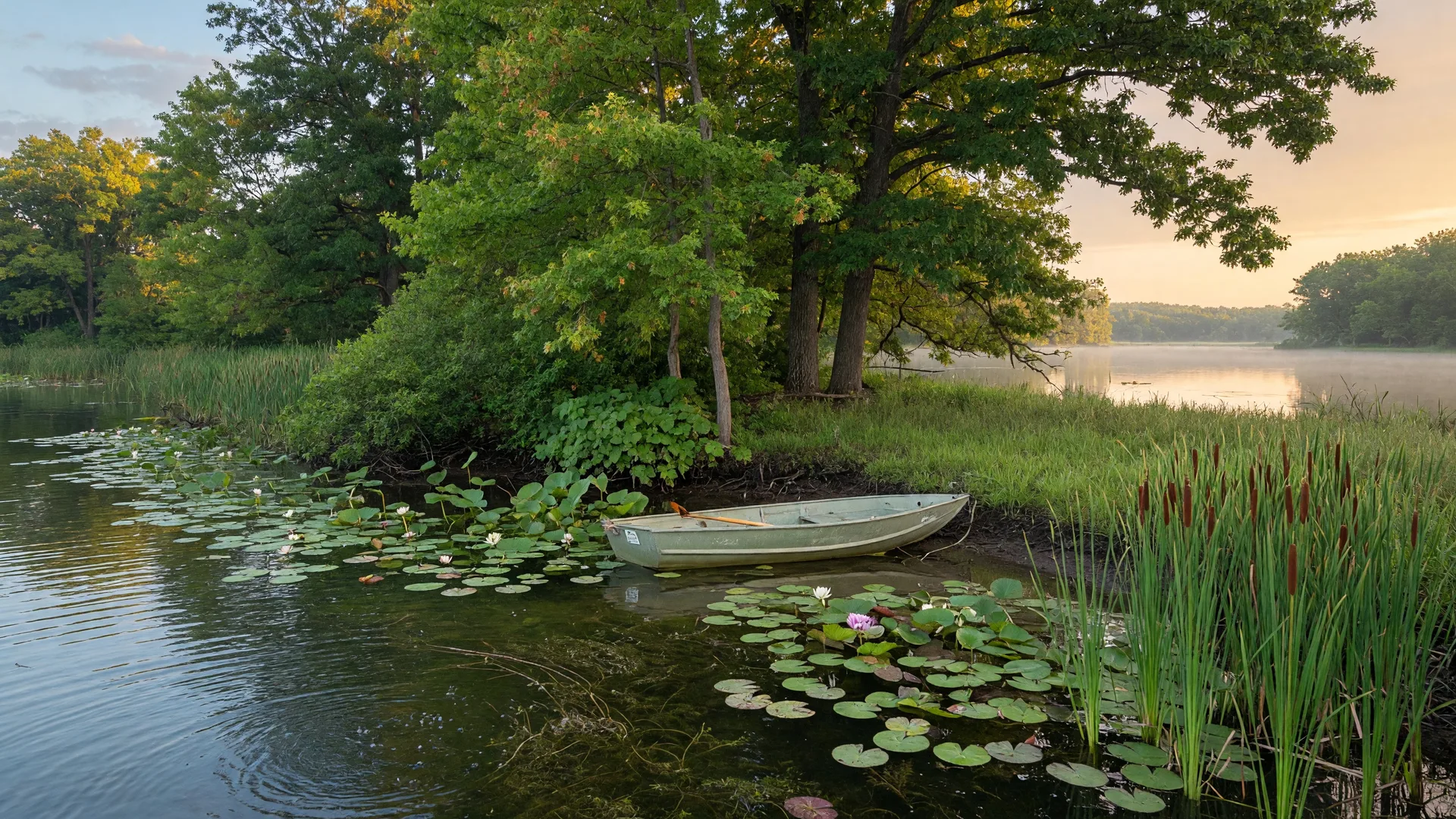

If you own lakefront property in Minnesota, you've probably stared out at the water one summer and thought, "When did all that stuff show up?" Aquatic vegetation is a natural part of a healthy lake ecosystem, but sometimes it gets out of hand — whether it's an invasive species taking over or native plants growing a little too enthusiastically. Here's a practical guide to understanding lake weeds, when you can remove them, and how to do it the right way under Minnesota DNR rules.
Why Lake Weeds Become a Problem
Not all aquatic vegetation is bad. In fact, a healthy lake depends on it. Native plants provide habitat for fish and wildlife, stabilize the lake bottom, and help keep water clean by absorbing nutrients. The problems start when either:
- Invasive species move in and outcompete native plants, creating dense mats that choke out everything else.
- Native vegetation grows too thick in shallow areas, making swimming, boating, or fishing difficult.
Either way, thick weed growth can turn a great lake experience into a frustrating one. And in Minnesota, you can't just grab a rake and start pulling — the DNR regulates aquatic vegetation removal to protect the lake's health.
Invasive Species to Know
Two of the most common troublemakers on Twin Cities lakes:
Eurasian Watermilfoil
The most widespread invasive aquatic plant in Minnesota. It forms dense surface mats that crowd out native plants, impede boating and swimming, and alter fish habitat. It spreads easily from tiny fragments — a single piece of stem can start a new infestation. Found in hundreds of Minnesota lakes, including several in the metro area.
Curly-leaf Pondweed
An invasive species that's actually an early-season plant — it grows in spring, dies back in midsummer, and releases turions (winter buds) that spread to new areas. The die-off can cause nutrient spikes and algae blooms. It's widespread across Minnesota and often the first weed homeowners notice in late spring.
Other species to watch for include starry stonewort (a gritty, branching algae that looks like a plant), flowering rush, and purple loosestrife in shoreline areas. The MN DNR invasive species page has photos and identification guides for all of them.
Native Overgrowth Can Happen Too
Even without invasive species, native plants like coontail, sago pondweed, and water celery can grow thick enough to be a nuisance. If your shallow littoral zone is choked with vegetation that makes swimming or docking difficult, the DNR's permitting process applies to native plant removal too — not just invasives.
The MN DNR Permitting Process
Here's the key fact every lake homeowner needs to know: you need a permit from the Minnesota DNR to remove aquatic vegetation in your littoral zone (the shallow area near shore, generally up to the depth where sunlight reaches the bottom). The DNR's Aquatic Plant Management (APM) program oversees this, and the rules apply to both invasive and native vegetation removal.
There are two main permit types for homeowners:
Individual (Regular) Permit
For homeowners who want to remove more than the standard allowance of vegetation. Requires a site visit from DNR staff, a written management plan, and approval for specific control methods. Best for larger projects, heavy infestations, or when you need more aggressive treatment. The permit is valid for up to five years with annual reporting.
Self-Help (General) Permit
A simpler option that allows homeowners to remove vegetation by hand or with a rake in a defined area (typically 15 feet wide by the length of the lot) without a site visit or formal plan. No herbicides or mechanical harvesting allowed. This permit is free and can be obtained online through the DNR's APM system.
You can apply for permits and find all the details on the MN DNR Aquatic Vegetation Management website. The site includes the online application portal, maps of infested waters, and species identification guides. It's the single best resource for lake homeowners dealing with weed issues.
Shoreland Regulations: What You Can and Can't Do
Beyond the standard APM permits, the DNR's shoreland management regulations page is the definitive go-to resource for understanding exactly what you're allowed to do along your shoreline. It spells out the practical rules in plain language — here are the key points every lake homeowner should know.
What You Can Do Without a Permit
The DNR allows lakeshore property owners to cut or pull submerged vegetation to create or maintain a swimming or boat-docking area without a permit, as long as:
- The cleared area is no larger than 2,500 square feet.
- The cleared area does not extend more than 50 feet along the shoreline (or one-half the length of your shoreline, whichever is less).
- A boat channel may be included, up to 15 feet wide and as long as necessary to reach open water (this is in addition to the 2,500 square foot allowance).
- The cutting or pulling is done by hand or with hand-operated or powered equipment that does not significantly alter the course, current, or cross-section of the water.
This is the DNR's way of saying: a reasonable amount of maintenance around your dock and swim area is fine. You don't need paperwork for a modest clearing that keeps your family's access to the water enjoyable.
What Requires a Permit
You do need a DNR aquatic plant management permit for:
- Destruction of emergent vegetation — cattails, bulrushes, wild rice, and other plants that grow above the waterline. These are heavily protected because they prevent erosion, filter runoff, and provide critical wildlife habitat.
- Cutting or pulling submerged vegetation in an area larger than 2,500 square feet or extending more than 50 feet along the shore.
- Use of automated aquatic plant control devices such as the Crary WeedRoller or similar mechanical systems.
- Physical removal of floating-leaf vegetation (like water lilies) from an area larger than a channel 15 feet wide extending to open water.
- Any herbicide or pesticide application in public waters — this requires a licensed applicator and an individual permit.
Emergent vegetation rules catch a lot of homeowners off guard. Those cattails and bulrushes along your shore might look like something you'd like to clear for a better view, but they're doing important work — holding the shoreline together, filtering pollutants, and providing nesting habitat for birds and spawning habitat for fish. The DNR takes their protection seriously.
The Balance: Maintaining Access vs. Protecting the Lake
The DNR's regulations aren't designed to make your life difficult — they exist to strike a careful balance between two legitimate needs: your ability to enjoy reasonable access to the water and the lake's long-term health. The distinction between maintaining your shoreline and harming the ecosystem comes down to scale and method.
Maintaining your shoreline means clearing a modest area around your dock and swim platform, keeping a boat channel open, and managing invasive species. It's targeted, minimal, and done with methods that don't disturb the lake bottom or kill native plants indiscriminately.
Harming the ecosystem happens when you clear too much vegetation, destroy emergent plants, or use methods that strip the lake bottom bare. A shoreline stripped of native plants invites erosion, sends sediment into the water, eliminates fish and bird habitat, and can trigger algae blooms as nutrients that were held by plants wash into the lake.
The shoreland regulations page is the best place to understand where that line sits for your specific situation. Bookmark it, read it before you pull a single plant, and when in doubt, reach out to the DNR's Aquatic Plant Management staff — they'd rather answer your questions upfront than issue a violation later.
Quick Tips for the Permit Process
- Apply early — spring permits are processed faster than midsummer requests.
- Identify your weeds before applying. The DNR needs to know what you're dealing with.
- Mark your treatment area clearly on a lake map or aerial photo.
- If your lake is on the DNR's infested waters list, the rules are stricter.
- Self-help permits are a great starting point for light maintenance.
Methods of Vegetation Control
Once you have a permit (or know which one you need), you have several options for actually removing the vegetation. Each has pros and cons, and the right choice depends on your situation, your lake's ecology, and what the DNR approves in your permit.
Mechanical Harvesting
This is the big equipment approach. A mechanical harvester — essentially a floating lawnmower with a conveyor belt — cuts vegetation below the waterline and hauls the plant material up onto the boat. It's effective for large areas and removes the plant matter from the water, which prevents regrowth from decaying vegetation.
Pros: Fast, covers large areas, removes plant material entirely. Cons: Expensive (contractors charge by the hour or acre), can be disruptive to fish and wildlife habitat, and it's a temporary fix — vegetation grows back. The DNR may restrict harvesting windows to protect spawning fish.
Benthic Barriers
Benthic barriers are heavy fabric mats that are laid on the lake bottom to block sunlight and prevent plants from growing. Think of it as a blanket over the sediment. They're weighted down with sandbags or rocks and left in place for several weeks during the growing season.
This method works well for small, targeted areas — around a dock, a swim platform, or a boat lift. It's non-chemical and doesn't require heavy machinery. The downsides are that it takes time, the mats can be a tripping hazard for swimmers, and anaerobic conditions can form under the barrier if left too long.
Benthic barriers are a common method approved under self-help permits for small areas (typically up to 400 square feet). They're one of the most homeowner-friendly options if you're just trying to keep your swimming area clear.
Herbicide Treatments
For serious infestations, especially invasive species like Eurasian watermilfoil, herbicides are often the most effective option. The DNR approves specific aquatic herbicides that target certain plants while minimizing impact on native species. Application is done by licensed professionals, not homeowners.
This is the most controversial method — some lake associations and homeowners are wary of chemicals in the water, even when the products are EPA-approved for aquatic use. The key is that herbicides are species-specific when used correctly: the right chemical at the right concentration targets the invasive plant without harming the rest of the ecosystem.
Important: Herbicide use requires an Individual Permit from the DNR and must be carried out by a licensed applicator. The DNR will require a lake management plan and may mandate monitoring before and after treatment. This is not a DIY option.
Mechanical Harvesting
Best for large areas, heavy growth
Benthic Barriers
Best for small areas around docks and swim platforms
Herbicide Treatment
Best for invasive species, licensed applicator required
Tips for Keeping Your Lakefront Clear While Protecting Water Quality
Whether you're dealing with a full-blown milfoil infestation or just want to keep the swimming area clear, these practices will help you maintain a healthy lake:
Leave a Buffer
Don't clear every plant from your shoreline. A buffer of native vegetation filters runoff, prevents erosion, and provides habitat. Clear only the area you use for swimming and docking.
Prevent Spread
Clean your boat, trailer, and equipment before moving to a different lake. Invasive fragments spread easily. Remove all visible plants and drain water before leaving the access.
Know Your Lake
Check if your lake is on the DNR's infested waters list. Join your lake association — they often coordinate management efforts and can share resources and contractor recommendations.
Plan Ahead
Permits take time. Apply in early spring (March-April) for summer work. Self-help permits are faster, but Individual Permits with site visits may take several weeks.
Working with Your Lake Association
If you live on a lake with a homeowners or lake association, you're in luck. Many associations have existing DNR permits that cover multiple properties, or they coordinate with the DNR on lake-wide management plans. This can save you the hassle of getting your own permit for small-scale maintenance.
Lake associations also often contract with professional vegetation management companies, which gets you better rates than hiring a contractor on your own. And they typically have the best local knowledge — what's growing in your lake, what treatments have worked in the past, and what the DNR is likely to approve.
If your lake doesn't have an active association, consider starting a conversation with your neighbors. A coordinated approach to vegetation management is almost always more effective (and more affordable) than going it alone.
Key DNR Resources
Bookmark these two pages — they cover everything you need to know about aquatic vegetation management on Minnesota lakes:
- MN DNR Aquatic Plant Management → — Permits, applications, species IDs, and infested waters maps.
- MN DNR Shoreland Management Regulations → — The plain-language guide to what you can and can't do on your shoreline without a permit.
Whether you're a new lake homeowner or you've been on the water for decades, understanding the rules around aquatic vegetation management is part of being a good steward of the lake. The DNR's framework is designed to keep Minnesota's lakes healthy — and with a little planning, you can keep your shoreline usable and your lake thriving.
More Lake Living Resources
- Lakefront Living Guide → — Everything you need to know about life on the water.
- Boating on Twin Cities Lakes → — Boat access, regulations, and tips for local lakes.
- Fishing the Metro Lakes → — Species, seasons, and hotspots for anglers.
- White Bear Lake Guide → — In-depth guide to the area's largest lake.