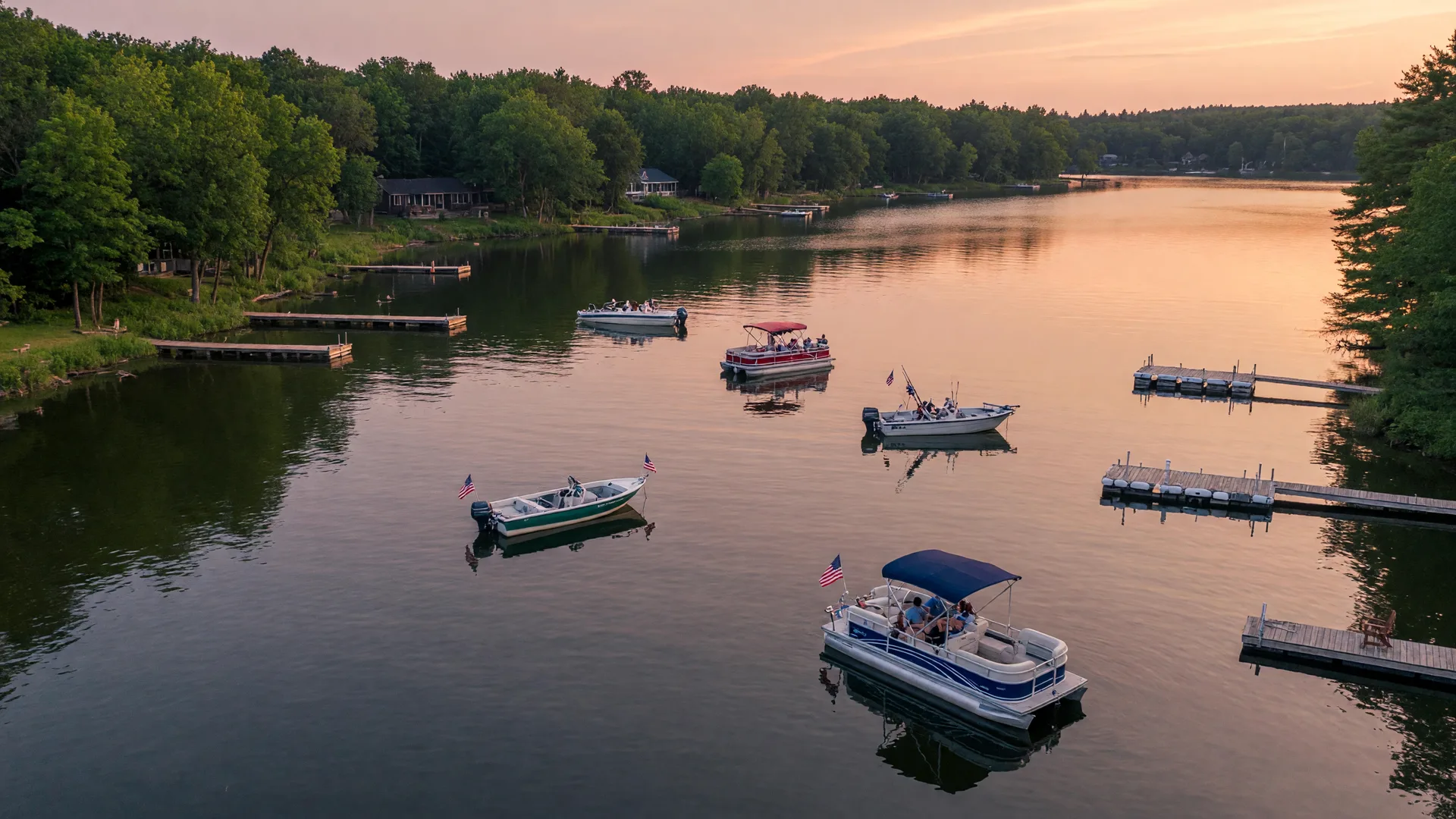

The 4th of July is the single busiest boating weekend of the year on Minnesota's lakes. More boats on the water means more risk — and the consequences of a mistake on the water can be devastating. As a retired firefighter and EMT who spent 15 years responding to emergencies on and around the water, I've seen firsthand what happens when boating safety takes a backseat to holiday fun. Here's what every boater on the Twin Cities lakes needs to know before heading out.
Life Jackets: The One Rule That Saves Lives
Here's the stat that should stop every boater in their tracks: 87% of drowning victims in fatal boating accidents were not wearing a life jacket (USCG, 2024). That number hasn't budged in years. Life jackets are the single most effective safety device on any boat, yet most adults don't wear them because they're "just going out for a quick ride."
Minnesota law requires:
- A U.S. Coast Guard–approved life jacket for every person on board
- Children under 10 must wear a life jacket at all times when the boat is underway
- Boats 16 feet or longer must carry a throwable life preserver (Type IV PFD)
My Recommendation
Don't just stow them — wear them. Modern inflatable and fishing-style life jackets are lightweight and comfortable. If you're on the water with kids, friends, or family, set the example. Accidents happen in seconds, not minutes.
Fire Prevention on the Water
The video above shows a real boat fire on the St. Croix River near Prescott, Wisconsin — one of our neighboring waterways. Boat fires can start from fuel leaks, electrical shorts, overheating engines, or even spontaneous combustion of oily rags stored improperly. Once a fire starts on a boat, it spreads fast, and your options for escape are limited.
Before You Leave the Dock
- Check your fire extinguisher. It must be USCG-approved, fully charged, and readily accessible. Boats under 26 feet need at least one B-I extinguisher if they have enclosed compartments or cooking equipment; boats 26–40 feet need two B-I or one B-II.
- Inspect fuel lines and fittings. Look for cracks, loose connections, or the smell of gasoline in the bilge. A fuel leak near a hot engine is a fire waiting to happen.
- Check electrical connections. Corroded or loose wiring is a leading cause of boat fires. Make sure battery terminals are clean and tight.
- Never smoke while fueling. Turn off the engine, stay at the dock, and keep any ignition sources away from open fuel.
- Keep the engine compartment clean. Oil, grease, and debris in the bilge are fuel for a fire. A clean bilge is a safe bilge.
What to Do If a Fire Starts
- Stop the boat and turn off the engine and fuel supply.
- Alert all passengers and get everyone into life jackets immediately.
- Try to fight the fire only if it's small and you can reach the extinguisher safely. Aim at the base of the flames, not the top.
- If you can't control it in 30 seconds, get off the boat. Move passengers to the stern (away from the fire), deploy the throwable device, and call for help.
- Call 911 and use your VHF radio (Channel 16) or cell phone to reach the Coast Guard or local authorities.
Boating Under the Influence: Don't Risk It
Alcohol is a factor in roughly 20% of boating deaths each year (USCG, 2024). Minnesota takes this seriously. Boating while intoxicated (BWI) carries the same penalties as a DWI on the road — and a first-degree BWI offense is a felony with fines up to $14,000. A BWI conviction also suspends both your driver's license and motorboat privileges for 90 days.
The "Operation Dry Water" enforcement campaign runs every year over the 4th of July weekend, with increased patrols on Minnesota lakes and rivers. Expect to see water patrol officers checking for impaired operators.
Remember
The sun, heat, wind, and boat motion all amplify the effects of alcohol. One drink on the water hits harder than one drink on land. Designate a sober skipper before the first drink.
Emergency Preparedness: What Every Boat Should Carry
Before you head out for the holiday weekend, do a quick safety check. Every boat — even a small fishing boat or paddle craft — should have:
Life Jackets
USCG-approved, properly fitted for every person
Fire Extinguisher
Charged, accessible, USCG-approved
Communication
Charged cell phone + VHF radio if equipped
Sun & Water Safety
Sunscreen, water, first aid kit, whistle
Holiday Weekend Specifics: What to Watch For
The 4th of July weekend brings unique hazards on the lake. Here's what to keep in mind:
- Crowded waterways. Expect heavy boat traffic, especially near popular launches like White Bear Lake's public boat launches. Maintain a safe speed and keep a sharp lookout.
- Fireworks debris. After the shows, spent fireworks and hot debris can land on the water. Keep a bucket of water aboard for dousing any hot material you find near your boat or dock.
- Late-night returns. Many boaters stay out after dark for fireworks. Make sure your navigation lights work, carry a waterproof flashlight, and reduce speed in low visibility.
- Swimmers and paddlecraft. Kayaks, paddleboards, and swimmers are hard to spot in evening light. Stay alert, especially near shoreline areas and docks.
- Weather changes. Summer storms can pop up quickly on Minnesota lakes. Check the forecast before you leave and monitor conditions while you're out. If you see lightning, get off the water immediately.
A Quick Word About the St. Croix
If you're boating the St. Croix River this weekend — whether from Stillwater, Hudson, or Prescott — keep in mind that the current is stronger than on the lakes. The river sees heavy recreational traffic over the holiday, and the current near dam areas can be dangerous. Know the river conditions, watch for barges and larger vessels, and always wear your life jacket. Our St. Croix River guide has more on navigating the waterway.
Enjoy the Weekend — Safely
The 4th of July on the lake is one of the best parts of living in this area. Fireworks over the water, family on the pontoon, fish jumping at sunset — it's what lake life is all about. But none of it is worth skipping a safety check or assuming "it won't happen to me."
Take five minutes before you leave the dock. Check your life jackets, your fire extinguisher, your fuel lines, and your phone battery. Tell someone where you're going and when you'll be back. And if you see someone who needs help on the water, don't hesitate — call 911 or hail them on VHF Channel 16.
Have a safe and happy 4th of July out there.
More Lake Life Resources
- Boating Guide → — Boat launches, sailing culture, and everything you need to know about getting on the water.
- Fishing Guide → — Walleye, bass, pike, and panfish on Twin Cities lakes.
- Ice Fishing Guide → — When the lake freezes, the fun continues.
- White Bear Lake Boat Launches → — Where to launch on the metro's biggest lake.
- St. Croix River Guide → — Navigating the St. Croix waterway.
Sources: U.S. Coast Guard 2024 Recreational Boating Statistics; Minnesota DNR Boating Guide 2026; BoatUS Foundation Fire Safety Resources; Operation Dry Water.